Introduction
Some trips become memories. Some become stories. And then there are a few journeys that change the way you see nature—and even yourself.
For me, the Valley of Flowers Trek in Uttarakhand was one of those rare journeys.
Before this trek, I had already completed the Sapt Kund Trek and the Chopta Tungnath Chandrashila Trek with Mapping the Himalayas. Those experiences gave me confidence in trekking and helped me fall in love with the Himalayas. So when I started looking for my next adventure, one place kept appearing everywhere—Instagram, YouTube, travel blogs, and social media feeds.
It was the famous Valley of Flowers National Park.
I had seen countless photographs of colorful alpine flowers, green meadows, waterfalls, glaciers, and mist-covered mountains. I also learned that the valley remains open for only a few months every year during the monsoon season. That made the destination feel even more special.
From that moment, I decided that I had to see it with my own eyes.
Today, after completing this trek, I can confidently say that no photo or video truly captures its beauty.
I saw heaven while I was still alive. I got to know nature closely, and in the process, I got to know myself too.
Why I Chose Mapping the Himalayas Again
People often ask me why I booked another trek with the same company instead of trying someone new.
The answer is simple.
Mapping the Himalayas is not just a trekking company—it is an emotion.
Unlike many trekking organizations that focus only on completing the itinerary, this team focuses on helping you understand the mountains. Their guides don’t just tell you where to walk. They explain the history of the place, introduce you to Himalayan flowers, share local stories, and teach you how mountain communities live.
That makes the entire journey much more meaningful.
Another reason I trust them is that their team belongs to the Himalayas. They know the routes, weather, local culture, and the people living in these villages better than anyone else.
Throughout all my treks with them, I have always felt safe and well looked after.
Their groups are also relatively small, which means every trekker gets personal attention instead of feeling lost in a crowd.
Meet the Amazing Trek Leaders
Our trek leaders were Ankush and Manoj, and they played a huge role in making this journey unforgettable.
Both of them were calm, patient, and highly experienced.
Whenever someone felt tired, they never rushed the group. Instead, they motivated everyone, shared interesting stories, and made sure every trekker was comfortable.
What impressed me the most was their knowledge.
They knew almost everything about the mountains—flowers, glaciers, rivers, wildlife, weather, and local traditions.
Since they are locals, they also speak Hindi, English, and the local mountain language. Everywhere we went, they greeted villagers in their native language. Watching those conversations made me feel like I wasn’t just visiting the Himalayas—I was experiencing the real culture of the region.
They were always ready to help, whether someone needed motivation during a difficult climb or simply wanted to know the name of a flower growing beside the trail.
That personal touch made the trek feel less like a commercial tour and more like travelling with friends who know every corner of the mountains.
Valley of Flowers Trek Overview
Before sharing my day-by-day experience, here’s a quick overview for anyone planning this trek.
Trek Name: Valley of Flowers Trek
State: Uttarakhand
Trek Duration: 6 Days
Maximum Altitude: Around 14,100 ft (Hemkund Sahib)
Difficulty: Easy to Moderate
Best Time: July to August (sometimes early September)
Total Trek Distance: Approximately 38 km (without Hemkund)
Ideal For: Nature lovers, photographers, beginners with basic fitness
If you’re planning to include Hemkund Sahib, be prepared for a much steeper climb than the Valley of Flowers trail.
My Trek Cost
One of the best things about this trek was that I didn’t have to worry about expenses once the journey started.
I paid ₹16,000 to Mapping the Himalayas, and the package included almost everything.
The package covered:
- Breakfast from Day 1
- Lunch until Day 6
- Dinner
- Accommodation
- Local transport
- Trek leader
- Trek management
Because almost everything was included, I hardly needed to carry extra cash except for optional shopping or personal snacks.
For anyone planning this trek, I found this package to be excellent value considering everything that was included.
Day 1 – Rishikesh to Fulna Village
Our adventure officially began at 7:00 AM from Rishikesh.
The vehicle arrived on time, and our driver, Sandeep, immediately made everyone comfortable. He had a great sense of humour, and during the long drive, he kept the atmosphere relaxed.
Before leaving, our trek leader Ankush introduced everyone and explained the complete itinerary.
It instantly created excitement within the group.
After driving for about an hour, we stopped for breakfast.
The breakfast was simple but delicious.
We enjoyed hot Poha and Aloo Paratha, which gave us enough energy for the long drive ahead.
As we travelled deeper into Uttarakhand, the scenery kept changing.
The plains slowly disappeared.
Huge mountains surrounded us.
Beautiful rivers flowed beside the road.
Small villages appeared between the hills.
Children were returning from school.
Local people carried supplies along the mountain roads.
Every kilometre made me feel further away from city life.
We stopped again for lunch at Karnaprayag around 2 PM.
Later in the evening, we had another tea break before finally reaching Fulna Village at around 7 PM.
Many itineraries mention Govindghat as the first night’s stay, but our accommodation was in Fulna Village, about 4 km from Govindghat.
The hotel was clean, comfortable, and surrounded by mountains.
After dinner, everyone gathered while Ankush briefed us about the next day’s trek.
The excitement was building.
Tomorrow, we would finally begin walking into the Himalayas.
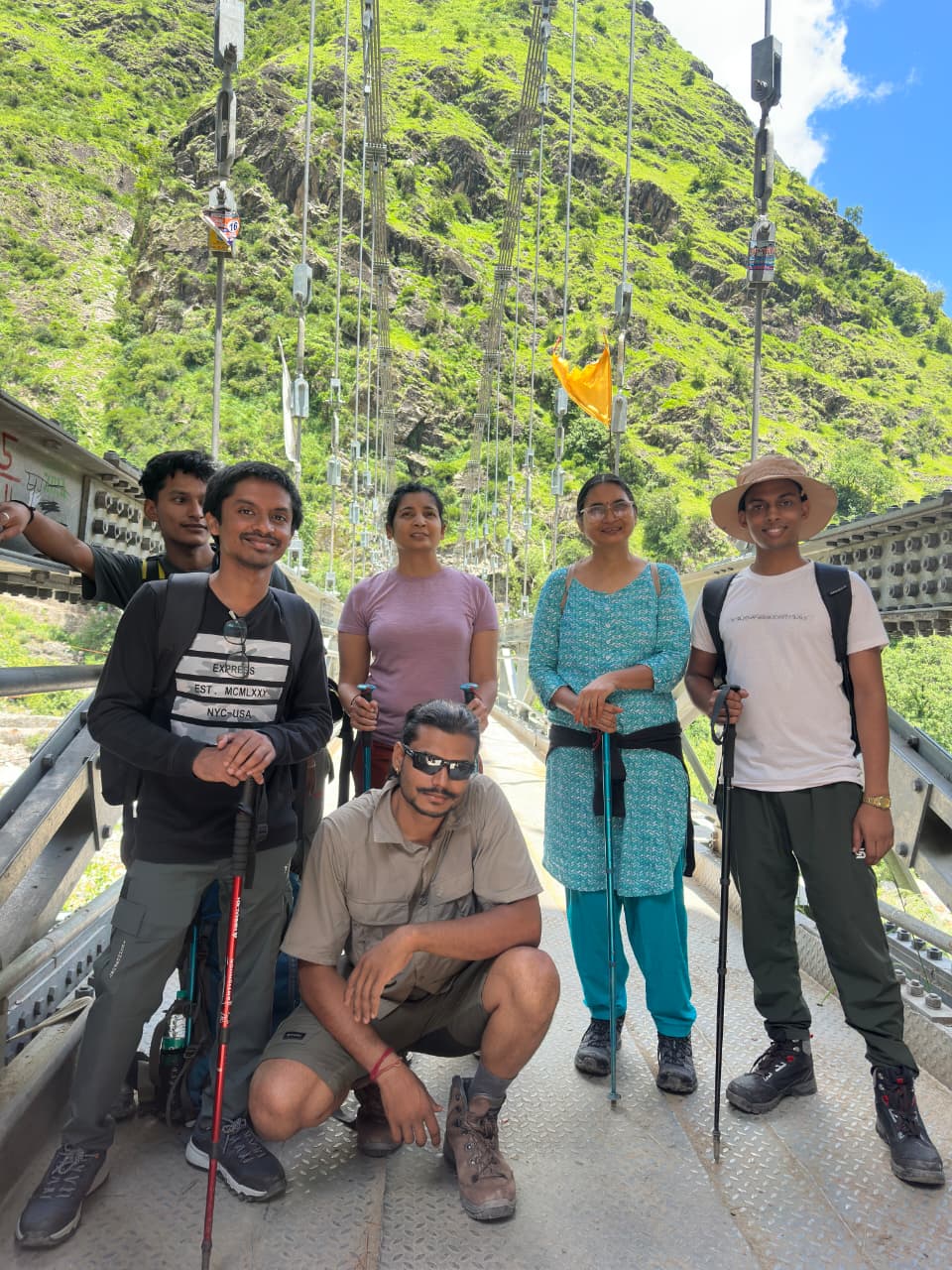
Day 2 – Fulna Village to Ghangaria: My First Steps into the Himalayas
The next morning, I woke up feeling excited because the real trekking adventure was finally about to begin.
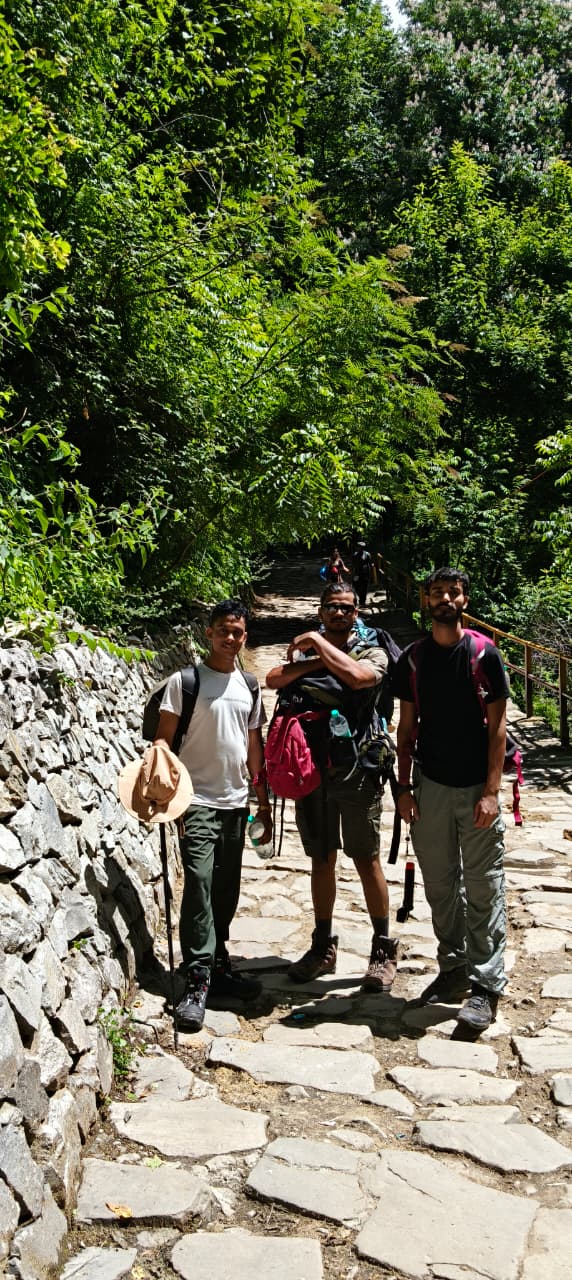
After a light breakfast, we packed our day bags while the team arranged our packed lunch. Around 7:00 AM, we started walking from Fulna Village towards Ghangaria.
The total trekking distance for the day was approximately 13 km.
The moment we entered the trail, I realized this wasn’t going to be an ordinary trek.
The fresh mountain air felt completely different from City. It was so clean that it honestly felt like the AQI was zero. Every deep breath felt refreshing.
The trail followed the beautiful Pushpawati River, and throughout the journey we were surrounded by dense forests, waterfalls, wooden bridges, and towering Himalayan peaks.
Unlike city life, there was no traffic noise.
Only the sounds of flowing water, birds, and the cool mountain breeze.
That silence itself became part of the experience.
Taking It Slow
One thing I appreciated about our trek leaders was that they never rushed anyone.
Every couple of kilometres, we stopped for a short break.
These breaks allowed everyone to relax, drink water, click photographs, and simply enjoy the surroundings.
Around three hours into the trek, we stopped for tea.
Our packed lunch included Aloo Paratha, which tasted much better after hours of walking.
Later, while waiting for some group members, I enjoyed sweet lassi at one of the small mountain shops.
Simple moments like these often become the best memories.
Nature at Every Turn
As we continued climbing, every turn revealed something new.
Sometimes there were roaring waterfalls.
Sometimes colorful wildflowers.
Sometimes clouds covering the mountain peaks.
One of my favourite moments came when we crossed a bridge over a fast-flowing river.
Standing there and looking down at the crystal-clear water was unforgettable.
At another point, we stopped beside a glacier-fed waterfall and refilled our water bottles with fresh mountain water.
It was among the purest water I have ever tasted.
We also found wild blueberries growing beside the trail.
Our guides showed us which ones were safe to eat, making the experience even more memorable.
Reaching Ghangaria
After trekking for most of the day, we finally reached the helipad near Ghangaria around 4:30 PM.
Although we had technically reached our destination, we spent a little more time resting before walking into the village.
Ghangaria is a peaceful little Himalayan settlement that serves as the base camp for both the Valley of Flowers and Hemkund Sahib.
After checking into our rooms, we freshened up and were served dinner.
The meal included:
- Aloo Sabji
- Roti
- Rice
- Dal
- Salad
- Pickle
After dinner, everyone gathered in one room.
We talked for hours, laughed together, shared trekking stories, and got to know each other better.
Looking back, this simple evening became one of my favourite memories from the entire trek.
Before sleeping, Ankush briefed us about the next day’s plan.
Tomorrow was the day I had been dreaming about for years.
Tomorrow, I would finally enter the Valley of Flowers.
Day 3 – Valley of Flowers: The Day I Saw Heaven
I don’t think I slept very deeply that night.
I was too excited.
For years I had seen photographs of the Valley of Flowers online.
Now I was finally going to see it with my own eyes.
After breakfast, we collected our packed lunch and left Ghangaria around 8:00 AM.
The trail to the Valley of Flowers starts gently, but before entering the national park we had to wait at the entrance gate.
Due to entry management, our group spent nearly one hour waiting for permits.
Although waiting felt frustrating at that moment, I had no idea that everything waiting ahead would make it worthwhile.
My First Rare Himalayan Flower
Soon after entering the park, Ankush stopped the group.
He pointed towards a unique flower growing beside the trail.
It was the famous Cobra Lily.
Instead of simply telling us its name, he explained why it looked the way it did, where it grows, and why it is considered special in the Himalayas.
This is one thing I loved about trekking with Mapping the Himalayas.
Every flower had a story.
Every mountain had history.
Every trail had meaning.
A little further ahead, we saw something I had always wanted to witness.
The legendary Blue Poppy.
Seeing it in real life felt completely different from seeing photographs online.
It was easily one of the biggest highlights of the trek.
Waterfalls Everywhere
As we continued walking, waterfalls appeared everywhere.
Some were tiny streams crossing the trail.
Others crashed down from hundreds of feet above us.
We crossed several beautiful bridges over glacier-fed rivers.
Naturally, everyone stopped countless times for photographs.
But gradually I realized something.
No photograph could truly capture what my eyes were seeing.
Finally Entering the Valley
The first few kilometres involved a steady uphill climb.
Later, the trail became relatively flat.
Around 2:00 PM, we finally reached the main Valley of Flowers.
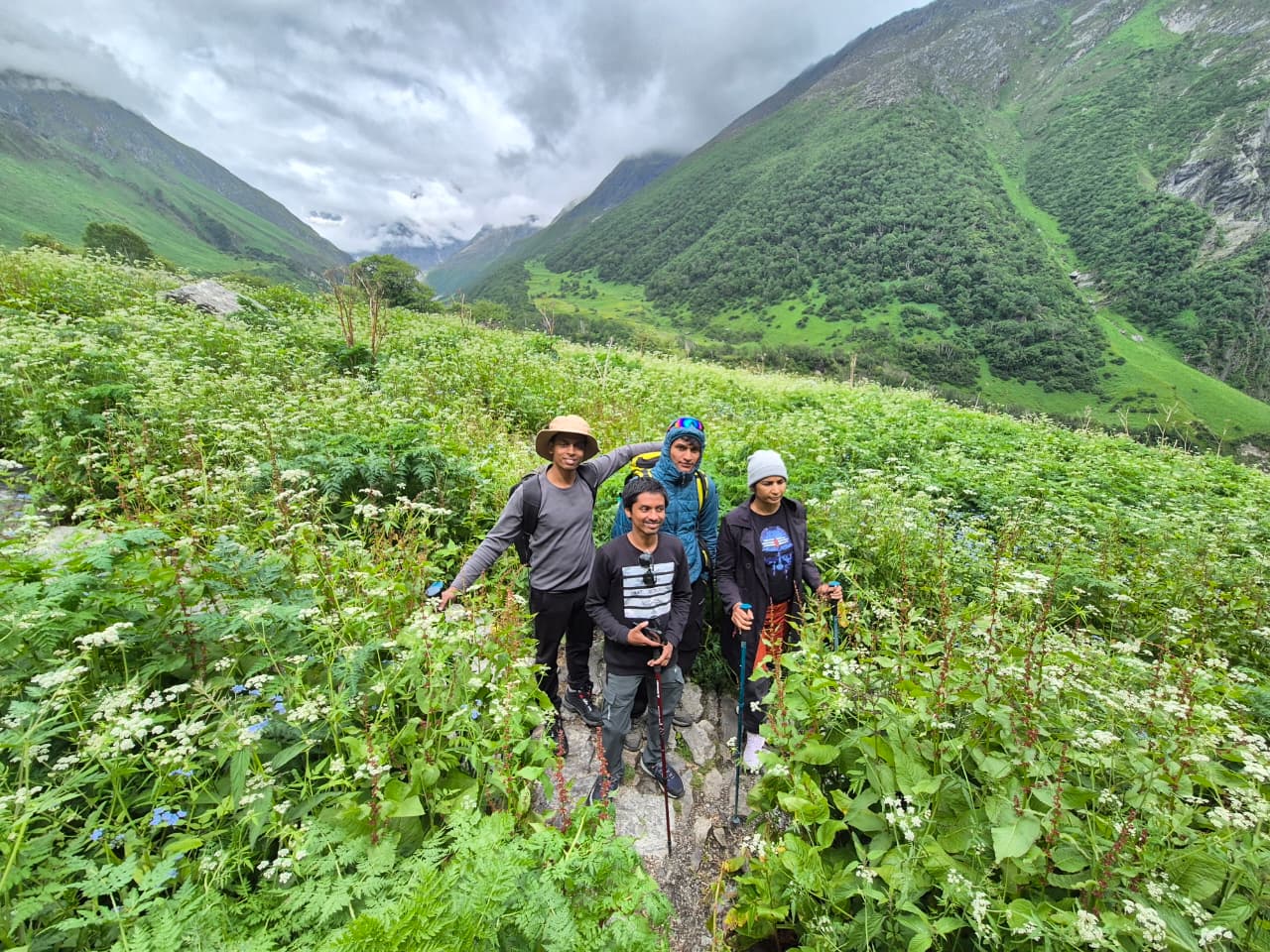
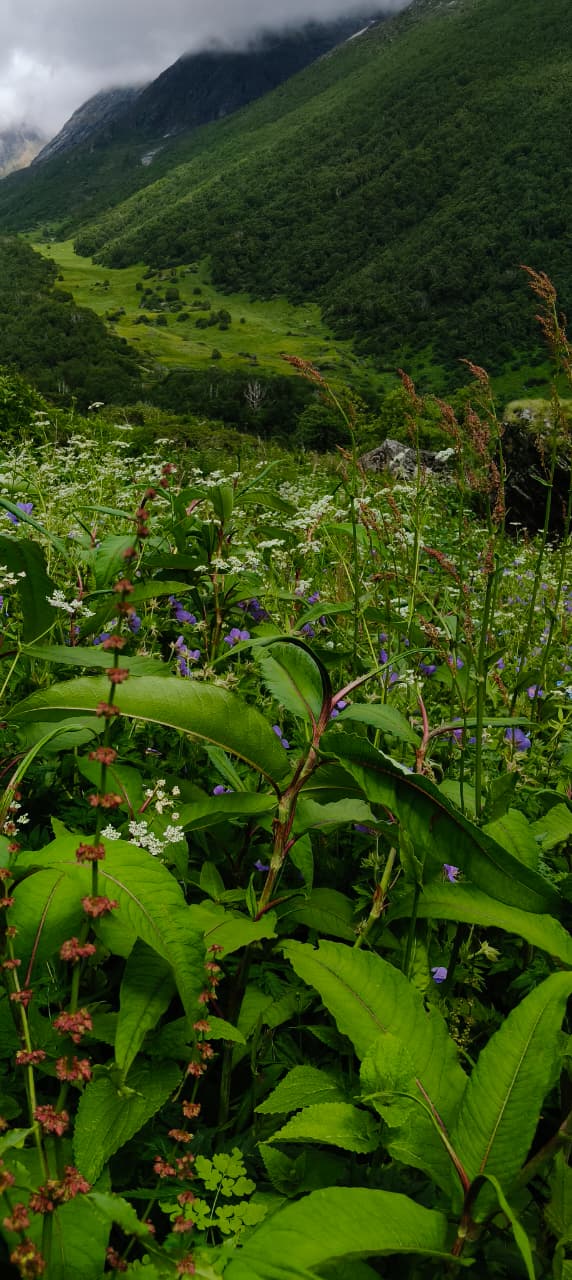
The moment I stepped inside, I completely understood why this place is called heaven on earth.
A massive green valley stretched before me.
Thousands of colourful Himalayan flowers covered the landscape.
Waterfalls flowed down from glaciers.
Clouds floated slowly between giant mountains.
Fresh air filled every breath.
It felt unreal.
Our group stopped for lunch while enjoying one of the most beautiful landscapes I had ever seen.
After lunch, I explored deeper into the valley along with few other trekkers.
Every few minutes we stopped for photographs because every direction looked different.
The Ten Minutes I’ll Never Forget
Out of all six days, one memory remains closest to my heart.
At one point, I found myself completely alone.
No one else was nearby.
I sat quietly for about ten minutes.
I didn’t use my phone.
I didn’t speak.
I simply listened.
The only sounds were waterfalls flowing through the valley, the cool mountain wind, and complete silence.
Those ten minutes changed something inside me.
In that moment, I wasn’t thinking about work, social media, or everyday life.
It was just me and nature.
Even today, whenever someone asks me about the Valley of Flowers Trek, this is the first memory that comes to my mind.
Time Passed Too Quickly
Unfortunately, the Valley of Flowers has fixed closing hours.
Around 3:00 PM, we had to begin our return journey because visitors must exit before evening.
If I ever do this trek again, I will start even earlier so I can explore the valley all the way to its far end.
Because of the limited time available, I couldn’t reach the last section of the valley, and that remains one thing I still want to experience.
Back in Ghangaria, we had dinner together before attending another briefing for the next day.
Tomorrow’s challenge would be completely different.
It was time to climb towards the sacred Hemkund Sahib.
Day 4 – Hemkund Sahib: The Toughest Day of the Trek
After spending an unforgettable day in the Valley of Flowers, it was time for the most physically demanding part of our journey—the trek to Hemkund Sahib.
Not everyone in our group decided to go.
Out of our group, only five members chose to trek to Hemkund Sahib because everyone knew this climb was much steeper than the Valley of Flowers trail.
We started around 8:00 AM after breakfast.
Unlike the previous day’s gentle trail, the path to Hemkund Sahib begins climbing almost immediately.
Every step tested our stamina.
The route was crowded because thousands of Sikh pilgrims visit Hemkund Sahib every year during the pilgrimage season.
Despite the crowd, the atmosphere was peaceful.
People encouraged each other to keep climbing, and every few minutes someone would say, “Waheguru Ji Ka Khalsa, Waheguru Ji Ki Fateh.”
That positive energy kept everyone motivated.
The Steepest Climb
For me, this was undoubtedly the hardest part of the entire trek.
The climb felt never-ending.
One mistake I made was trying to keep up with some faster trekkers at the beginning.
Later, I realized that mountain trekking isn’t a race.
You have to walk at your own pace.
The mountains reward patience, not speed.
This became one of the biggest lessons I learned during the trip.
If you’re planning this trek, don’t compare yourself with others.
Walk slowly.
Take breaks whenever needed.
Enjoy the journey.
Eventually, you’ll reach the destination.
Reaching Hemkund Sahib
Around 12:30 PM, we finally reached Hemkund Sahib, one of the highest Gurudwaras in the world.
The first thing I saw was the beautiful glacial lake surrounded by towering Himalayan peaks.
The water looked unbelievably clear.
Even though the weather was cold, one member of our group gathered enough courage to take a dip in the freezing lake.
I was happy just standing there and admiring the view.
The temperature was much lower than in Ghangaria, and I was thankful I had packed a warm jacket.
A Feeling of Peace
The Gurudwara itself had a peaceful atmosphere that is difficult to describe in words.
After the challenging climb, sitting quietly there felt incredibly calming.
Whether you’re religious or not, it’s hard not to feel something special in a place like this.
For a while, I forgot about the exhaustion.
There was only silence, mountains, and peace.
The Descent
Going downhill was much faster.
It took us around two and a half hours to return to Ghangaria.
Although my legs were tired, I felt satisfied.
I had completed the toughest day of the trek.
After dinner, we attended another briefing because the next morning we would leave Ghangaria and continue our journey towards Badrinath.
Day 5 – Ghangaria to Badrinath and Mana Village
The next morning, we started descending from Ghangaria around 7:00 AM.
The 13 km downhill trek felt much easier than the climb two days earlier.
By around 1:00 PM, we reached Pulna Village, where our vehicle was waiting.
After saying goodbye to the trekking trail, we continued our road journey towards Badrinath.
A Holy Dip at Tapt Kund
Once we reached Badrinath, my friend Venkatesh and I decided to take a bath in the famous Tapt Kund before visiting the temple.
The naturally hot water felt amazing after several days of trekking.
It relaxed our tired muscles and refreshed us completely.
Badrinath Temple
After bathing, we joined the queue for darshan.
Fortunately, there wasn’t a long wait.
Within about 10 minutes, we entered the temple.
The atmosphere inside was peaceful and spiritual.
After darshan, we spent some time exploring the temple area and clicking photographs.
Local Food
No mountain trip is complete without trying local treats.
While walking around Badrinath, I enjoyed:
- Kulhad chai
- Rasgulla
- Kesar milk
Simple food often tastes extraordinary after days of trekking.
Evening at Mana Village
Later, we reached Mana Village, India’s last village before the Indo-Tibet border.
The accommodation here turned out to be the best stay of the entire trek.
The rooms were clean, comfortable, and offered beautiful mountain views.
After some rest, we explored the village.
Saraswati River and Bheem Shila
One of the highlights was seeing the powerful Saraswati River.
Watching such a forceful river emerge from the mountains was fascinating.
We also visited the famous Bheem Shila, where mythology says Bhima placed a massive rock to help Draupadi cross the river.
Nearby, we saw the Pandava statues, which added another historical and spiritual dimension to the visit.
Some members of our group spent time shopping for souvenirs, while I preferred exploring the surroundings.
The Night Sky I’ll Never Forget
That night gave me one of the most magical memories of the entire journey.
Living in Delhi, I rarely get to see a sky full of stars.
But in Mana Village, the sky looked completely different.
Thousands of stars filled the darkness.
I stood outside for a long time simply looking upward.
One particularly bright object caught my attention.
Out of curiosity, I searched online and discovered that it was Venus.
Seeing such a clear night sky reminded me how much we miss while living in big cities.
Before sleeping, everyone gathered once again in one room.
We laughed, shared stories from the trek, and realized that strangers from six days earlier had become friends.
Day 6 – Saying Goodbye to the Himalayas
Every trek eventually reaches its final day.
This morning felt emotional because none of us wanted the journey to end.
We started driving around 7:30 AM.
After about thirty minutes, we stopped for tea.
A little later, our trek leaders Ankush and Manoj, along with one trekker, left for another expedition.
It was time to say goodbye.
Even though we had spent only a few days together, it genuinely felt like saying goodbye to friends.
The rest of us continued towards Rishikesh with our driver, Anil.
Most of the journey was accompanied by rain.
Instead of making the drive boring, it made the mountains look even more beautiful.
Old Hindi songs played inside the vehicle while clouds drifted across the valleys outside.
We stopped several times at beautiful viewpoints for photographs.
One of the most memorable stops was Devprayag, where the Bhagirathi and Alaknanda rivers meet to form the sacred Ganga.
Standing there and witnessing the confluence was another unforgettable moment.
Before reaching Rishikesh, we stopped at Shivpuri, where one member of our group decided to do bungee jumping.
Watching that adventure from below was exciting enough for me!
By evening, we finally reached our hotel in Rishikesh.
The trek had ended.
But the memories were only beginning.
I had come looking for beautiful flowers.
I returned home with unforgettable friendships, a deeper respect for nature, and memories that will stay with me for a lifetime.
Food During the Valley of Flowers Trek
One question almost every trekker asks is:
“How is the food during the Valley of Flowers Trek?”
Based on my experience, I was completely satisfied.
The meals were simple North Indian food, but they were fresh, hygienic, and exactly what your body needs after trekking all day.
Some of the meals included:
- Poha
- Aloo Paratha
- Dal
- Rice
- Roti
- Aloo Sabji
- Salad
- Pickle
- Tea
After trekking for several hours, even a simple meal tastes amazing.
The best part was that I never had to worry about finding food because Mapping the Himalayas managed everything from Day 1 breakfast to Day 6 lunch.
Accommodation Review
Accommodation during the trek was much better than I expected.
We stayed in comfortable rooms at different locations, and everything was clean and well-managed.
Out of all the places we stayed, my favourite was Mana Village.
The peaceful environment, comfortable rooms, and beautiful mountain surroundings made it the best stay of the entire trip.
Although you should not expect luxury hotels in the Himalayas, the accommodation was more than comfortable enough after a long day of trekking.
Weather During My Trek
Mountain weather changes very quickly.
During my trek, the weather changed almost every 30 minutes.
Here’s what I experienced:
- Mostly clear weather during the day.
- Rain almost every night.
- Occasional fog at higher altitudes.
- Pleasant daytime temperatures.
- Cold evenings and nights.
In Ghangaria, the daytime temperature was around 15°C, while nights dropped to around 7–8°C.
During the Hemkund Sahib trek, it felt much colder, so carrying warm clothes is essential.
Mobile Network
If you’re planning to work remotely or stay connected throughout the trek, keep your expectations realistic.
For most of our four-day stay around Govindghat and Ghangaria, there was almost no mobile network.
Only Jio worked occasionally, and even that signal was weak.
Instead of seeing this as a problem, I saw it as a blessing.
Without constant notifications, I could enjoy the mountains without distractions.
Drinking Water and Toilets
Many first-time trekkers worry about water availability.
Thankfully, drinking water wasn’t an issue.
During the trek, we even refilled our bottles from fresh glacier-fed waterfalls after confirming with our guides that it was safe.
Toilets were available at different points along the route, although they weren’t frequent.
Medical facilities also existed at certain locations, but they were limited.
That’s why carrying a personal first-aid kit and essential medicines is always a good idea.
Wildlife
Although I didn’t encounter any large wild animals, I did see several beautiful mountain birds along the trail.
I don’t know all their names, but watching them fly through the forests added another layer of beauty to the trek.
What to Pack for the Valley of Flowers Trek
Based on my experience, here’s what I recommend carrying:
Clothing
- Warm jacket
- Trekking T-shirts
- Trekking pants
- Extra clothes
- Gloves
- Cap
Trekking Gear
- Trekking shoes
- Trekking pole
- Raincoat
- Sunglasses
Personal Items
- Small towel
- Water bottle
- Personal medicines
- Power bank
- Basic toiletries
A good raincoat is especially important because mountain weather changes quickly.
Fitness Required for the Valley of Flowers Trek
Many people believe this trek is suitable for complete beginners.
Personally, I think that’s only partly true.
While the Valley of Flowers trail itself is relatively easy, you should still prepare your body before coming.
I recommend doing:
- Cardio exercises
- Walking or jogging
- Leg workouts
- Thigh strengthening exercises
- Basic chest and endurance training
If you’re planning to visit Hemkund Sahib, fitness becomes even more important because the climb is much steeper.
Photography Tips
I didn’t carry an expensive camera.
I used my normal smartphone throughout the trek.
One lesson I learned is something I’d like every traveller to remember:
Never think, “I’ll click photos later because the next viewpoint will be even better.”
The Himalayas change every few minutes.
Clouds move.
Light changes.
Mist appears and disappears.
Every moment is unique.
If you see a beautiful scene, stop and capture it immediately—both photos and videos.
That exact moment may never come again.
What I Would Do Differently Next Time
If I ever return to the Valley of Flowers, I’ll change just one thing.
I’ll start much earlier on Valley Day.
Because of the waiting time at the park entrance and the fixed closing hours, I couldn’t explore the valley all the way to its far end.
Next time, I want to spend even more time inside this magical place.
Honest Review of Mapping the Himalayas
This was my third trek with Mapping the Himalayas, and once again, they exceeded my expectations.
What makes them different isn’t just the itinerary.
It’s the experience they create.
They don’t rush you from one destination to another.
Instead, they help you understand the mountains.
Our trek leaders, Ankush and Manoj, were calm, knowledgeable, and incredibly supportive.
They explained the local flowers, wildlife, geography, and culture throughout the trek.
Because they belong to the region, they also spoke comfortably with local people in their native language, making the experience feel authentic.
Most importantly, I always felt safe.
From transportation and accommodation to food and trekking management, everything was well organized.
If someone asks me whether I would trek with them again, my answer is simple.
Absolutely.
My Biggest Advice for Future Trekkers
If you’re planning this trek, here are my biggest suggestions:
- Start your trekking day early.
- Prepare your fitness before arriving.
- Carry a raincoat and warm clothes.
- Don’t rush—walk at your own pace.
- Capture photos whenever you like the view.
- Enjoy the journey instead of chasing the destination.
- Don’t believe people who say there isn’t much to see in the Valley of Flowers.
Because there is.
In fact, it’s one of the most beautiful places I have ever visited.
Frequently Asked Questions (FAQs)
Is the Valley of Flowers Trek worth it?
Yes. If you love nature, waterfalls, flowers, mountains, and peaceful landscapes, this trek is absolutely worth doing at least once in your lifetime.
How much did the trek cost?
I paid around ₹16,000 to Mapping the Himalayas, which covered accommodation, transport, meals from Day 1 breakfast to Day 6 lunch, and complete trek management.
Is the Valley of Flowers Trek difficult?
The Valley of Flowers trek is easy to moderate, but Hemkund Sahib is significantly more challenging because of its steep climb.
Is mobile network available?
Very limited. During my trek, only Jio worked occasionally around Ghangaria.
Which flower impressed you the most?
The Blue Poppy was my favourite. Seeing it in its natural habitat was unforgettable.
Final Thoughts
When I booked this trek, I thought I was going to see beautiful flowers.
I was wrong.
I experienced much more than that.
I met wonderful people.
I learned about mountain life.
I walked through forests, crossed glacier-fed rivers, stood beside waterfalls, watched the stars from Mana Village, visited Hemkund Sahib and Badrinath, and discovered the peace that only the Himalayas can offer.
But the moment that stays with me the most is still those ten quiet minutes inside the Valley of Flowers.
No people.
No conversations.
Just the sound of waterfalls, cool mountain air, and complete silence.
That moment reminded me that nature doesn’t need to speak loudly to leave a lasting impact.
If someone asks me today to describe my entire journey in one sentence, my answer will always be the same:
“I saw heaven while I was still alive. I got to know nature closely, and in the process, I got to know myself too.”
If you’re looking for more than just a trek—if you’re looking for an experience that reconnects you with nature, challenges you physically, and leaves you with memories that last a lifetime—then the Valley of Flowers Trek deserves a place on your bucket list.
I hope my journey helps you plan yours. See you in the Himalayas!
My name is Anitha, English teacher, wished to see VALLEY OF FLOWERS at the age of 57. My great inspiration is my sister who frequently treks with the same set of people. This time I joined. Its a wonderful experience. No words to describe either about the things I have seen or about the emotional connection I had with this group while I was trekking . As someone said I had experienced heaven on earth while I was in that area.
Great Anita, really it is good change. 👍